Animation Technology
← Leonida Hub By Alex · Last updated:
| Status | Rumor |
|---|---|
| Key patent | "System and Method for Virtual Character Locomotion" (Take-Two, 2020)Confirmed |
| Second filing | "System and Method for Runtime Retargeting" (Take-Two)Confirmed |
| Core idea | Procedural assembly of small animation building blocks — no loopsConfirmed |
| Retargeting in GTA 6 | NPC bodies vary in height and build; animations retarget liveConfirmed |
| Animation count | 600,000+ NPC animations, against 55,000 in GTA 5 and 300,000 in RDR2Confirmed |
| Simulated detail | Hair root to tip, individual fingers, per-leaf foliageConfirmed |
| In GTA 6 | Community analysisRumor |
The patents are public record.
Why This Matters
Nearly every game you’ve played animates characters the same way: pre-recorded clips looping and cross-fading. Walk in a straight line and you’re watching the same cycle repeat. Rockstar’s patent describes something structurally different — and if it ships, it’s the biggest change to character motion since Euphoria physics arrived with GTA IV.
The Paper Trail
In 2020, Take-Two filed “System and Method for Virtual Character Locomotion.” The named inventor on it is a Rockstar AI, gameplay, and animation programmer.
A second filing, “System and Method for Runtime Retargeting,” covers adapting animation to different body proportions on the fly.
Building Blocks Instead of Loops
The patent’s core move: shred motion capture into tiny reusable fragments, then let the engine assemble them procedurally at runtime.
- Micro-fragments, not clips. The animation library stores components, not complete walk cycles.
- Runtime synthesis. Each moment of movement is composed live from the character’s current state.
- State-driven selection. Defined conditions — tired, injured, drunk, armed — bias which blocks get chosen.
- Procedural transitions. Blending between movements is calculated, not authored, killing the snap between canned animations.
The practical consequence: no two steps need ever be identical. Every stride can respond to speed, terrain slope, surface type, stamina, injuries, what’s being carried, even wind and rain.
How the Character Knows Its Own State
The RAGE engine reportedly feeds the animation system through “blackboards” — live data stores tracking everything about a character. The animation layer reads them continuously:
| Condition | Motion response |
|---|---|
| Downpour | Hunched posture, shielded face, careful footing |
| Steep slope | Forward lean, shortened stride, visible strain |
| Exhaustion | Heavy breathing, slowed pace, stumbles |
| Weapon drawn | Shifted balance, readiness in the arms |
| Being chased | Panic gait, look-backs, reckless speed |
Motion Matching — and Past It
The industry’s current gold standard is motion matching (popularized by Ubisoft and EA): search a huge mocap database each frame for the clip segment best fitting the character’s state. Rockstar’s approach differs in kind, not degree:
| Motion matching | Building-block system | |
|---|---|---|
| Data | Full mocap clips, large DB | Compact component library |
| Memory | Heavy | Lighter (components reused) |
| Transitions | Retrieved from data | Computed procedurally |
| Variation ceiling | Limited to what was captured | Effectively unbounded |
| Context response | Good | The whole point |
The memory argument alone is compelling: storing components instead of sequences is how a studio affords this fidelity across hundreds of on-screen NPCs.
Runtime Retargeting: One Animation, Every Body
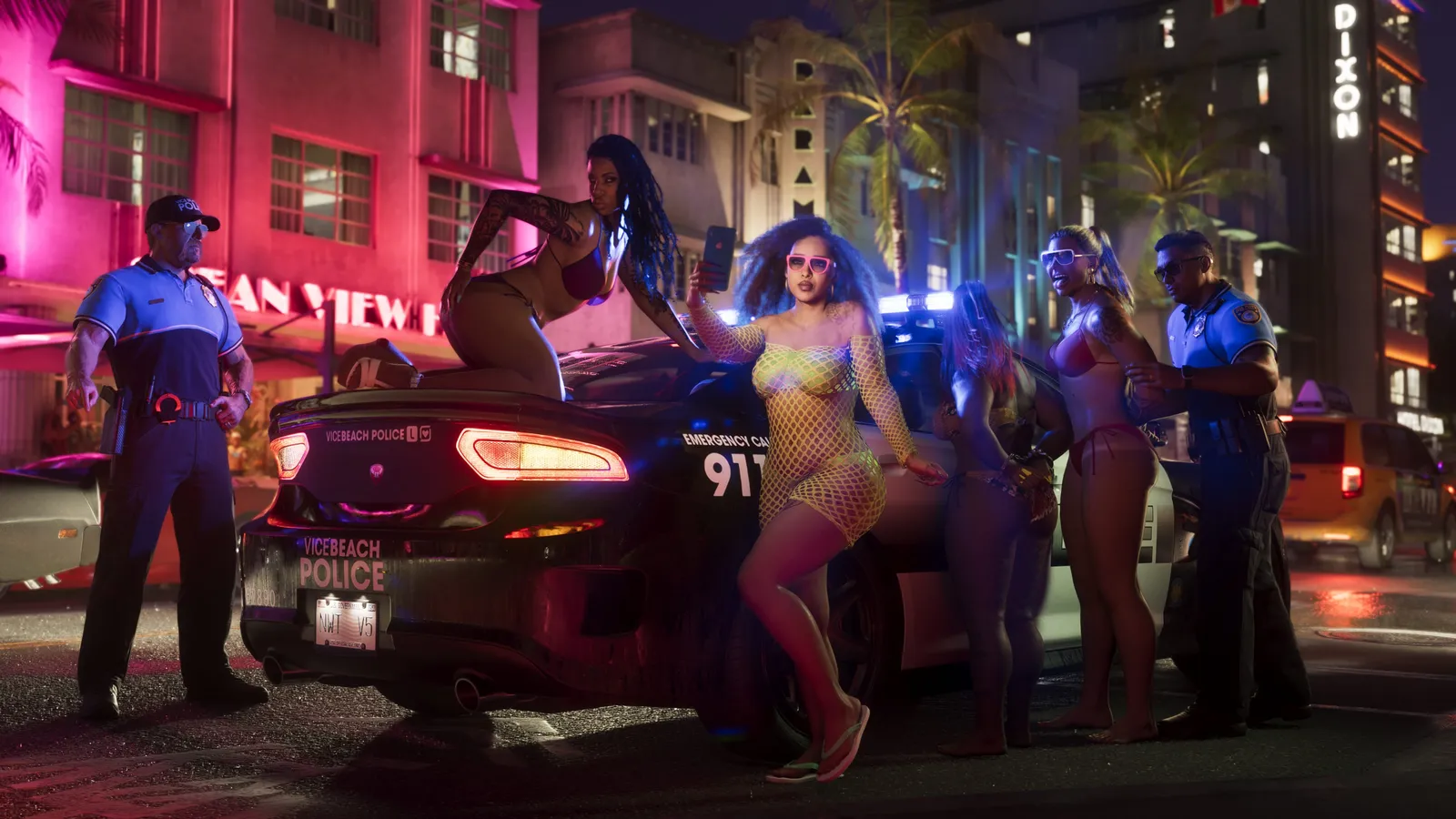
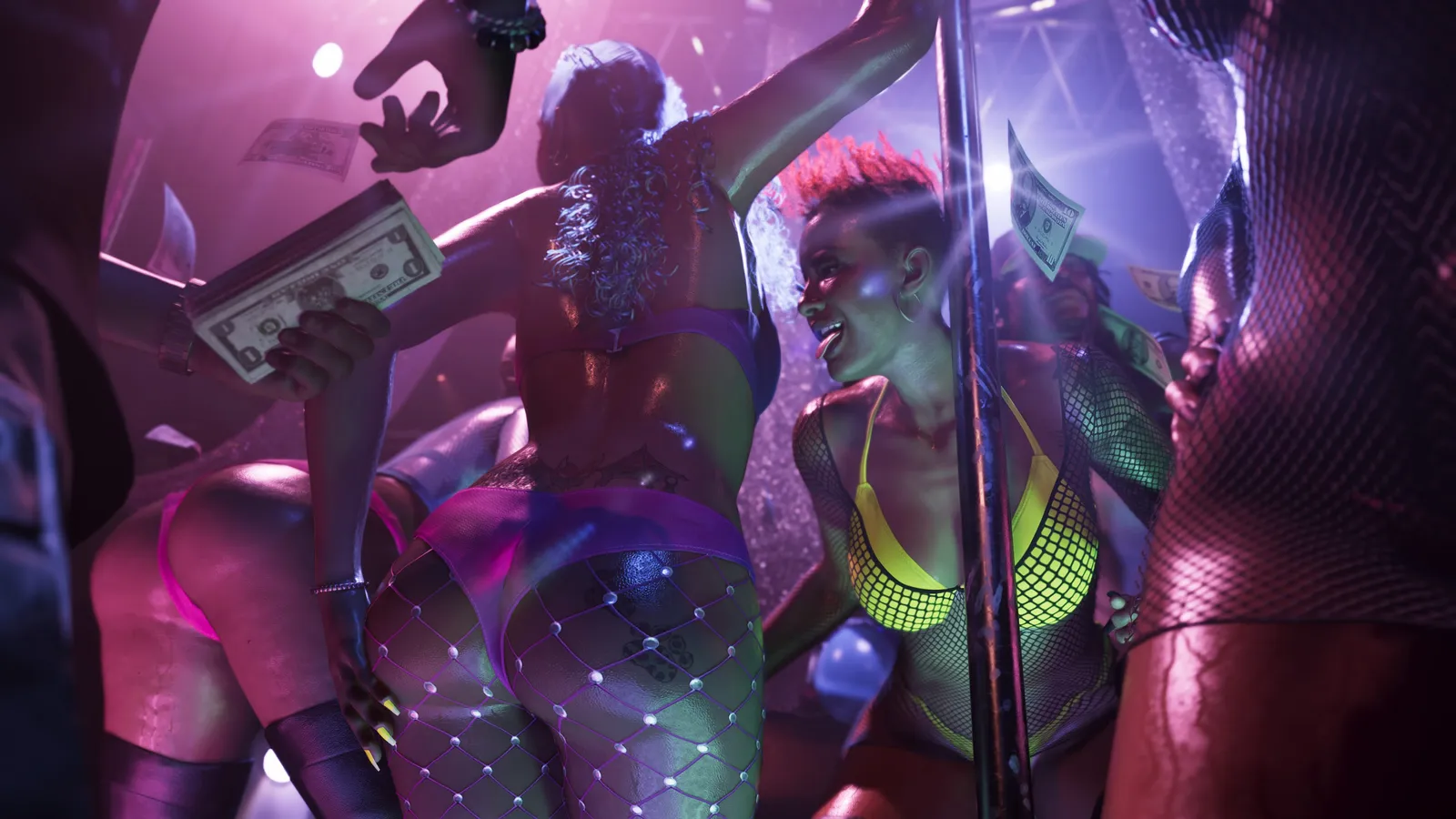
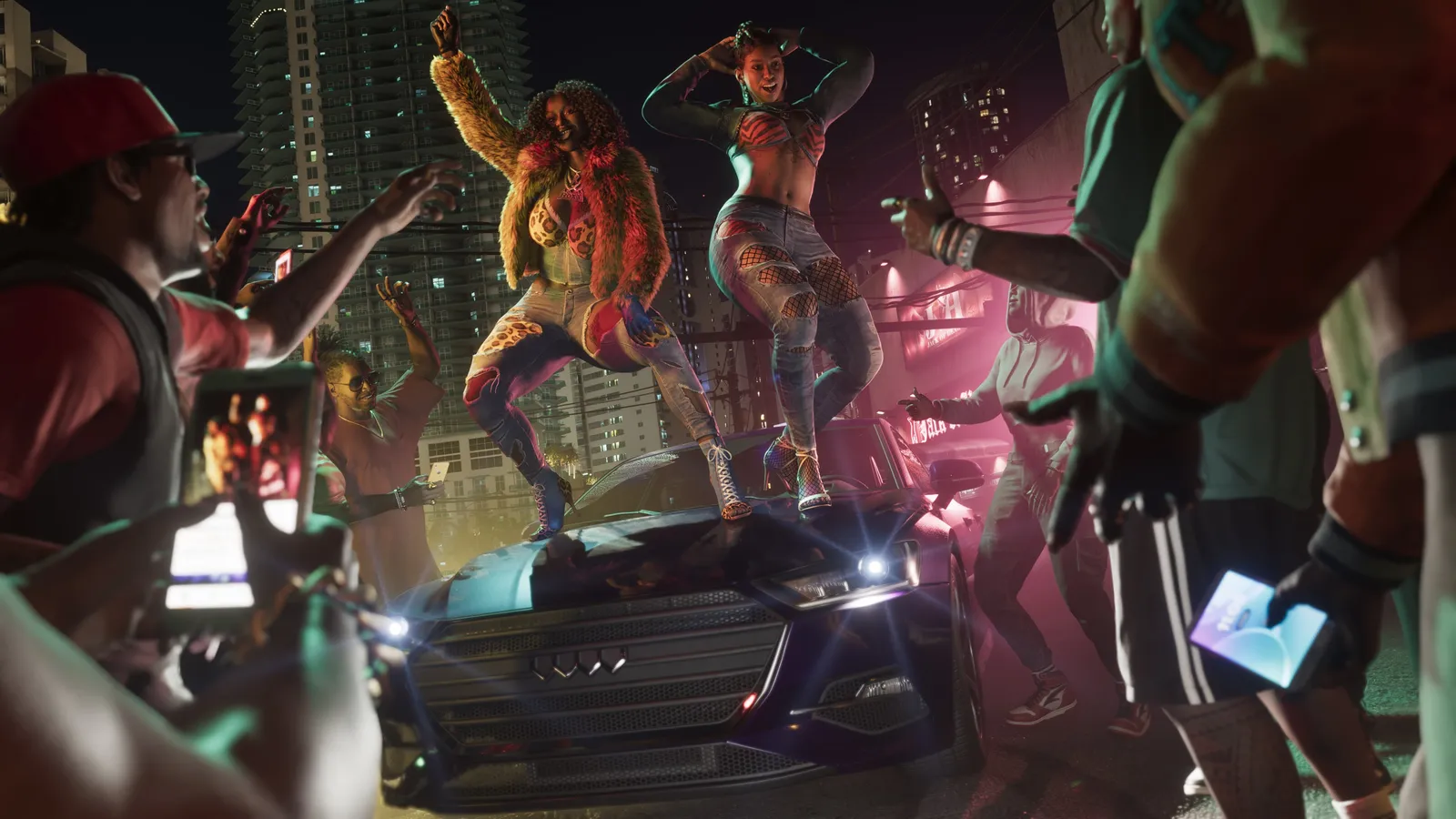
The second patent is the one already on screen. In An Extended Look, Leonida’s crowds come in more heights and builds than any Rockstar game before, and the animations retarget to those bodies live — the same movement carried by a tall frame and a short one without either looking borrowed.
The problem it solves is a brutal production cost: animation traditionally has to be adjusted per body type. Runtime retargeting adapts motion to tall, short, heavy, or thin characters during gameplay. That buys three things at once — deep player customization in Online without broken animations, visually diverse NPC crowds without exponential animator workload, and no pre-baked per-body variants bloating the install.
Rockstar gave the New York Times a number for the scale: well over 600,000 NPC animations, against 55,000 in GTA 5 and 300,000 in RDR2. And the simulation reaches well past locomotion — hair is solved from root to tip, fingers articulate one by one, and foliage moves leaf by leaf instead of swaying as a single texture.
If both systems ship, expect them to become the new industry reference point — the way every studio chased Euphoria after 2008.
The Weight Problem RDR2 Left Behind
RDR2 was praised and criticized for the same thing: animation with real mass behind it. Arthur turned like a man who weighed something, and opinion split on whether that was immersion or friction. Leonida is a city, and a city asks for a different tempo — Jason and Lucia have to feel a generation quicker than Arthur without going back to characters who pivot on a coin.
A Baked Clip and a Live System Look Different
From press previews
One detail from the previews makes the distinction concrete. A dive into water isn’t a canned clip: the player steers the body through the air, changing the speed and direction of the spin on the way down.
That is worth understanding, because it explains why footage of systems like this can look rough. A baked animation is a recording — it plays back identically every time and can be polished frame by frame until it’s perfect. A live system assembles the motion each frame from player input, physics and blending, so it will never look identical twice, and a half-tuned one looks unmistakably awkward in a video. The two are judged by the same eyes and shouldn’t be.
Everything here comes from official Rockstar materials. Analysis is labeled. We don’t publish leaks.
By Alex · Last updated:
Found something we missed? Share it in Discord
Join Discord